Panel Replacement · Fillmore
Panel Replacement for Fillmore's 1970s Garage Doors
Fillmore's garage doors mostly date to the mid-1970s, a decade ahead of the area's 1983 median. See what that means for panel matching and replacement costs.
Can You Do This Yourself
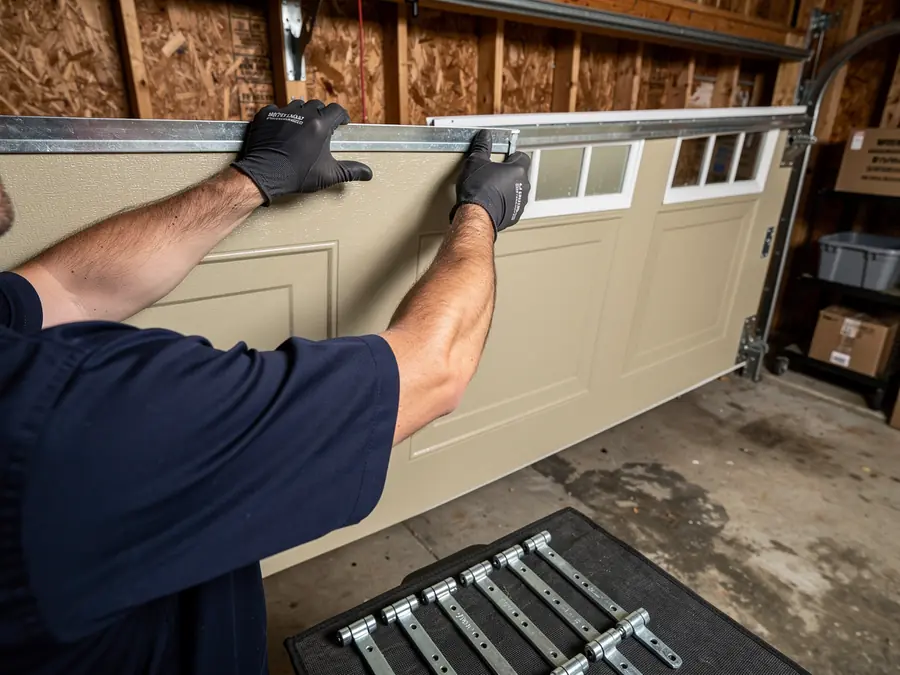
Fillmore's housing stock centers on 1975, which puts a lot of these garage doors a good ten years ahead of the 1983 median you'll find across the rest of the service area we cover. That decade matters. Doors from this era are usually flat steel sectional panels on a narrower rail system than what went up in the 80s and 90s, and the fastener spacing and panel height often don't match anything sold off the shelf today.
If you're dealing with a single dented or rusted panel and the rest of the door is sound, swapping that one section yourself is possible if you can find a matching panel - that's the hard part, not the wrench work. The panels bolt to adjacent sections and to the end stiles, and on these older doors the stile brackets are sometimes riveted rather than bolted, which turns a panel swap into a bigger job than it looks.
What we'd tell you honestly: if two or more panels on a door this age are damaged, or the track has bowed along with the panel, you're usually better off pricing a full door replacement against the panel repair before you buy parts you can't return.
The Cost of This Job
We don't post a flat number here because panel cost on a 1975-era door swings more than it does on newer stock. Fillmore sits at a median household income of $90,343, well under the $146,404 median for the wider area we serve, and that gap shows up in the mix of doors we see out here - more original hardware still in service, fewer homes that already swapped to a new insulated door.
The cost driver isn't labor, it's the panel itself. A matching section for a door built to 1975 specs sometimes has to be special-ordered from a supplier who still stocks that profile, and that lead time gets added to the job regardless of how simple the install is. If your door uses a more common panel width that we already carry, the job moves fast. If it's an odd size, we'll tell you that before we quote anything, not after.
Parts We Carry
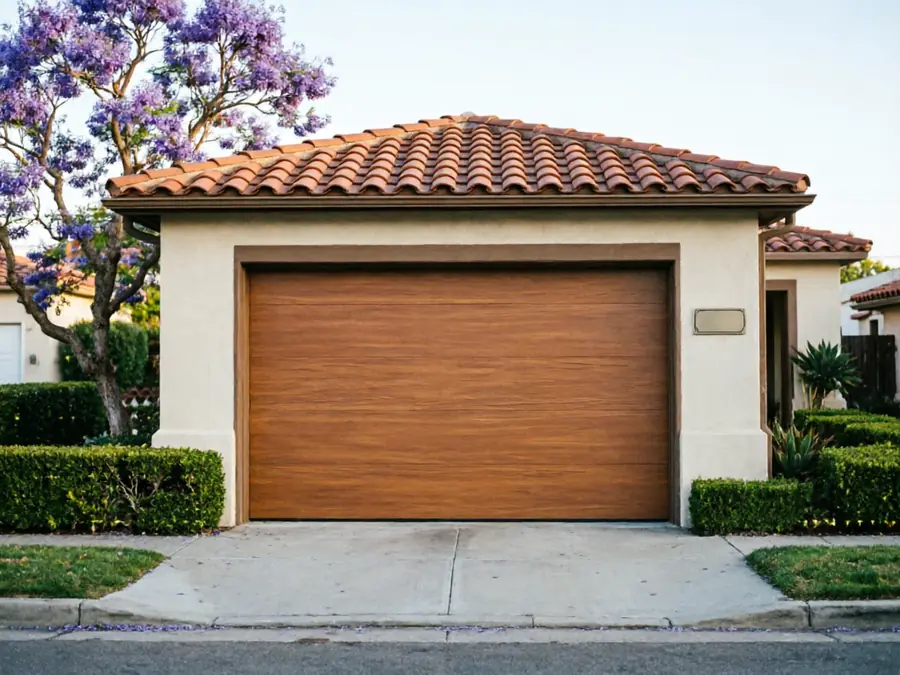
We truck standard-width steel panels out from Simi Valley, 13 miles over to Fillmore, for the panel sizes that cover most of what went up on this side of the valley through the 70s and 80s. Rollers, end hinges, and the stile hardware that typically fails alongside a cracked panel are stock items we bring on every call.
What we don't keep on the truck is a match for every discontinued panel profile. Some 1975-vintage doors used a rib pattern or a panel height that manufacturers stopped making years ago, and for those we order from whoever still carries the line - that's a parts-lead-time problem, not a labor problem, and it's the one limitation worth saying plainly: if your door needs a panel nobody makes anymore, we're waiting on the same supplier chain you'd be waiting on.
What the Repair Takes
On a straightforward single-panel swap - matching stock panel, sound track, no bent stiles - the job is mostly disconnecting the opener arm if the panel is near the top, pulling the fasteners, swapping the section, and rehanging. Climate here runs mild temperate, so we're not fighting frozen fasteners or swollen wood jambs the way a crew in a harsher climate band would be.
Where it runs longer is diagnosis. On a door built around 1975 we check the full run of panels and the track alignment before we touch anything, because a panel that looks like isolated damage is sometimes a symptom of a track that's been bowed for years. We'd rather spend ten extra minutes confirming that than send you home with a new panel bolted to a door that's going to fail again in the same spot.
FAQ
Questions about this
Will a new panel match the rest of my door if my house was built in the mid-70s?
Sometimes, but not always. Doors from around 1975 often used panel profiles that are no longer in production, so an exact match can require a special order. We check the panel width, rib pattern, and height against current stock before we quote, and we'll tell you up front if yours needs an ordered part.
Do you have a shop in Fillmore?
No. We're based in Simi Valley and drive out to Fillmore, about 13 miles each way, for panel and door jobs. We bring standard hardware and common panel sizes on the truck, and order in anything discontinued or non-standard.
Is it cheaper to replace one panel or the whole door?
Depends on the door's age and how many panels are damaged. On older doors like the ones common in Fillmore, a single matching panel can sometimes cost nearly as much as a chunk of a new door once you factor in sourcing an obsolete profile. We'll price both so you can compare before deciding.
Tell us what your door is doing.
We serve Simi Valley, CA and nearby communities. Every job starts with a diagnosis, so you know what failed before any work begins.