
Garage Door Installation · Simi Valley, CA
Installing a New Garage Door in Simi Valley
New garage door installation in Simi Valley, CA. Older 1960s-90s openers and doors in this mild climate often need full replacement, not another repair.
What the Repair Takes
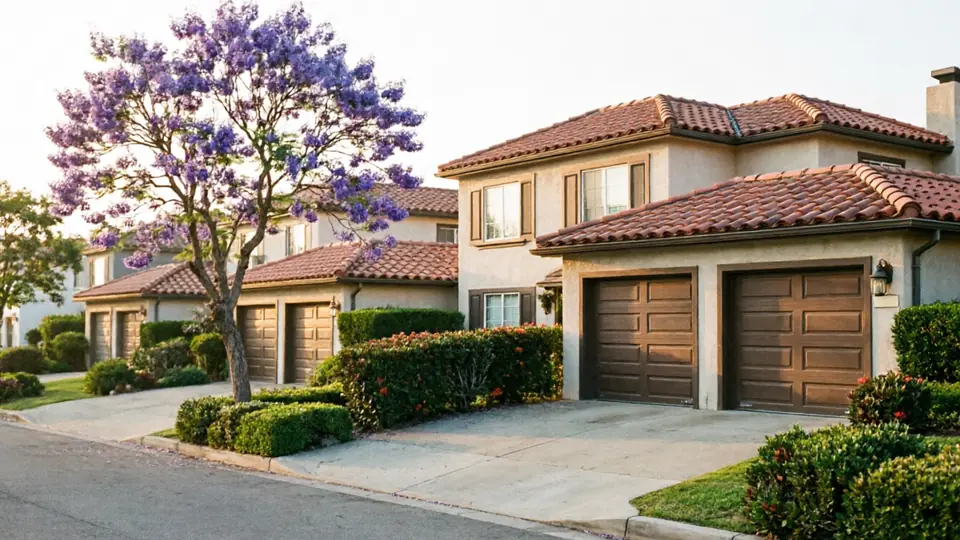
A straight repair means swapping a spring, a cable, or a roller and sending the tech home. An installation is a different job. We pull the old door off its track, strip the jamb hardware down to the studs, and check whether the opening itself is square - which it often isn't on houses from this town's 1956-1999 building run, median around 1983, where the framing settled decades ago. On that stock we're usually also replacing the track brackets and the torsion shaft mount, because the old ones were sized for a door nobody makes in that width anymore. If the house is one of the 1980s-90s builds that make up most of the stock across the valley's named tract areas, there's a good chance the opening was cut for a single wide door rather than two narrower ones, which limits what panel options actually fit without carpentry. We measure the opening before we quote anything, because guessing the width on a 40-year-old frame is how you end up ordering the wrong door twice. A full install also means a new bottom seal, new hinges, and usually a new opener bracket, since the old one rarely survives the door coming off clean.
How Long It Takes
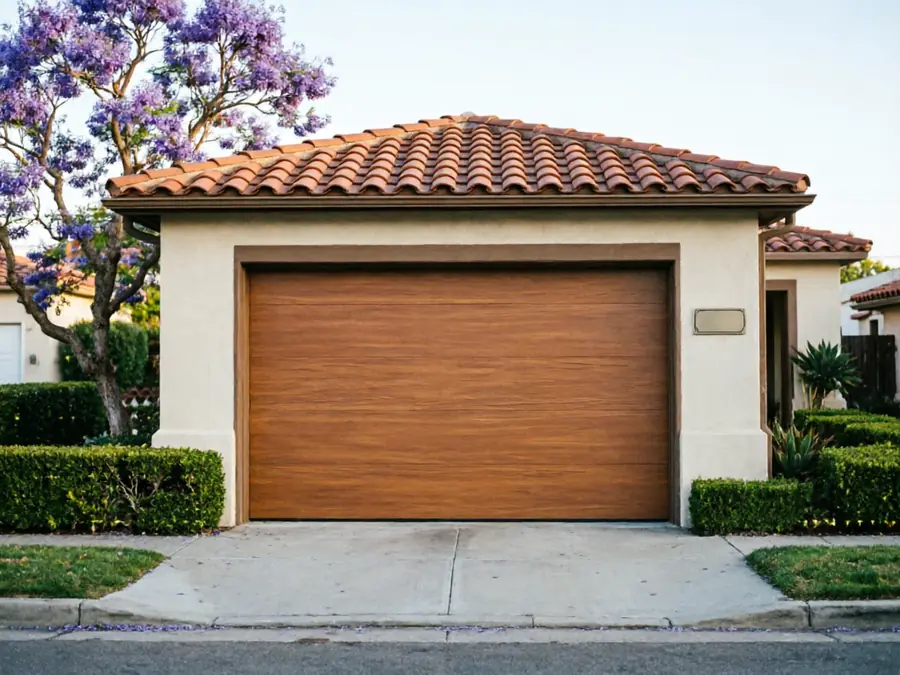
A stock steel door, torsion springs, and a standard opener is usually a one-day job once the door is on the truck. What stretches it is the order itself - if you want a wood-look insulated door or a specific panel style, that's a custom order from the manufacturer, and we don't control how long that takes to arrive. That's the honest limitation: we can install fast, we can't make a factory ship faster. Once the door's on site, removal of the old one, framing check, new track and spring set, panel install, and opener mount run in sequence, and we test balance and auto-reverse before we leave. Houses built on this town's older stock sometimes add an hour if the jamb needs shimming square or the old wiring for the opener has to be rerun to code. We'd rather tell you that up front than rush it and leave you with a door that drifts off-track in six months.
Why This Fails Locally
Simi Valley sits in a mild temperate band - no deep freeze, no ice to crack a slab or seize a track. That's the good news. The bad news is what replaces it: long dry summers that bake a steel door face and its spring coil through repeated heat-expansion cycles, season after season, with no cold snap to reset the metal. On a house from the 1956-1999 run, especially the 1980s-90s majority across the valley's tract areas, that door and its original torsion spring have been cycling through that heat for thirty-plus years without ever being swapped. Extension-spring setups common on garages from that era weren't built for today's heavier insulated doors, so when an owner upgrades the door but keeps the old spring hardware, it fails fast under the added weight. That combination - old spring rated for a lighter door, decades of sun-driven metal fatigue, no cold weather to mask the wear - is a pattern we see on this side of town more than any single bad part.
The Symptom
The door that needs installation, not repair, usually shows itself before it breaks outright. It sags visibly at the bottom corners when it's down. It won't hold itself halfway anymore - you let go and it drifts to the floor instead of staying put, which means the spring tension is gone, not just loose. The opener strains and groans on the way up, working harder than it used to because the door's heavier than the hardware was built for. Panels show daylight warping along the bottom few feet where sun hits hardest through the afternoon. If you're hearing a grinding pop on every open-close cycle, that's usually a roller finally giving out after years of heat cycling with no winter freeze to ever slow it down. None of these are a five-minute spring swap at that point - the track, the spring rating, and often the opener bracket are all working against each other, and that's when a new door, not another patch, actually saves money.
Service areas
Where we work around Simi Valley
Simi Valley and 7 nearby communities, each with its own page.
FAQ
Questions about this
How do I know if I need a new door instead of a repair on my current one?
If the door sags when stationary, won't hold halfway without drifting, or the opener strains noticeably more than it used to, the spring and hardware are mismatched to the door's weight - common on original 1980s-90s setups in this valley. At that point patching one part just shifts the strain to the next, and a full install resets the whole system to match.
Will a new door fit my current opening without extra framing work?
Usually, but not always. A lot of houses from this area's 1956-1999 building stock have openings cut for one wide single door rather than two narrower ones, which limits panel style choices unless we adjust the jamb. We measure the actual opening before quoting so you're not guessing.
Why does my garage door spring wear out even though it never freezes here?
Simi Valley's mild climate skips the freeze-thaw damage colder areas get, but long dry summers bake the spring and door face through repeated heat-expansion cycles with no cold season to reset the metal. On original hardware from the 1980s-90s housing boom here, that heat fatigue adds up over decades.
How long does a full door installation take once the new door arrives?
Usually one day for a stock steel door with a standard opener - removal, framing check, new track and spring, panel install, and opener mount, tested for balance before we leave. Custom panel orders take longer to arrive from the manufacturer, which is outside our control.
Tell us what your door is doing.
We serve Simi Valley, CA and nearby communities. Every job starts with a diagnosis, so you know what failed before any work begins.