
Garage Door Repair · Simi Valley, CA
Garage Door Repair for Simi Valley's Aging Door Stock
Torsion springs and openers from Simi Valley's 1960s-90s building boom are hitting the end of their service life together. Here's what the repair actually involves.
What the Repair Takes
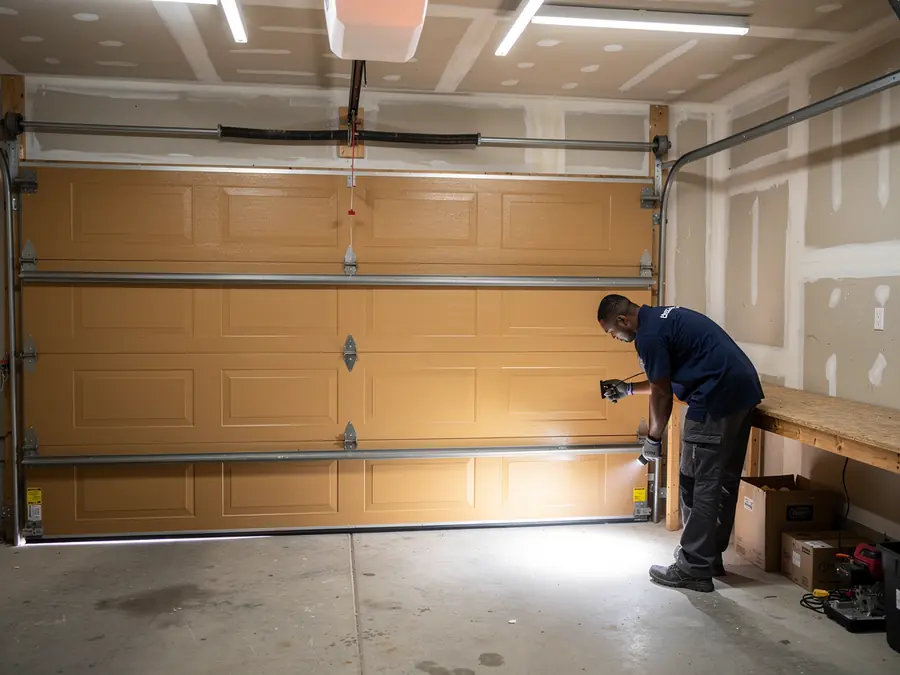
Most calls we get start the same way: the door won't open, or it opens and slams back down, or the opener runs but the door doesn't move. Before anything gets touched, the job is diagnosis - is this a spring, a cable, a broken roller bracket, or a motor that's given up. On a torsion spring job, that means unwinding the old spring with winding bars (never by hand, never by cutting it), pulling the broken halves off the shaft, and matching the replacement to the door's weight and the drum size already on the shaft. Extension spring jobs are different hardware entirely and need their own safety cables if the house doesn't already have them.
If it's a cable or roller failure, the door usually needs to come off track first, which means checking the track alignment and the jamb brackets before anything goes back together. If the opener's the problem, we test the logic board, the wall control, and the safety sensors before assuming it's the motor - a lot of "dead opener" calls turn out to be a misaligned sensor eye, not a $200 part.
One limitation worth saying up front: if a panel is cracked or rusted through on an older steel door, we're not going to patch it with filler and call it fixed. Matching panels on a 30-plus-year-old door usually isn't possible, and at that point replacement is the honest answer, not repair.
How Long It Takes
A straight torsion spring replacement, once we're on site and the parts match, usually runs under two hours. Cable and roller work is similar - most of the time goes into getting the door safely off its tracks and squared back up, not the parts swap itself.
What extends a visit is mismatched or obsolete hardware, which is common given how old a lot of this housing stock is. If a door was installed when the house was built in the 1970s or 80s, the drum size, the spring wind direction, or the bracket spacing can be non-standard compared to what's sold today. That means sourcing the right part instead of grabbing a universal one off the truck, and it's the main reason one job takes forty minutes and another takes most of an afternoon.
Opener repairs vary more. A sensor realignment is a five-minute fix. A full logic board failure means the opener gets replaced rather than repaired - we don't stock individual circuit boards, and by the time one fails, the rest of the unit is usually close behind it anyway.
Why This Fails Locally
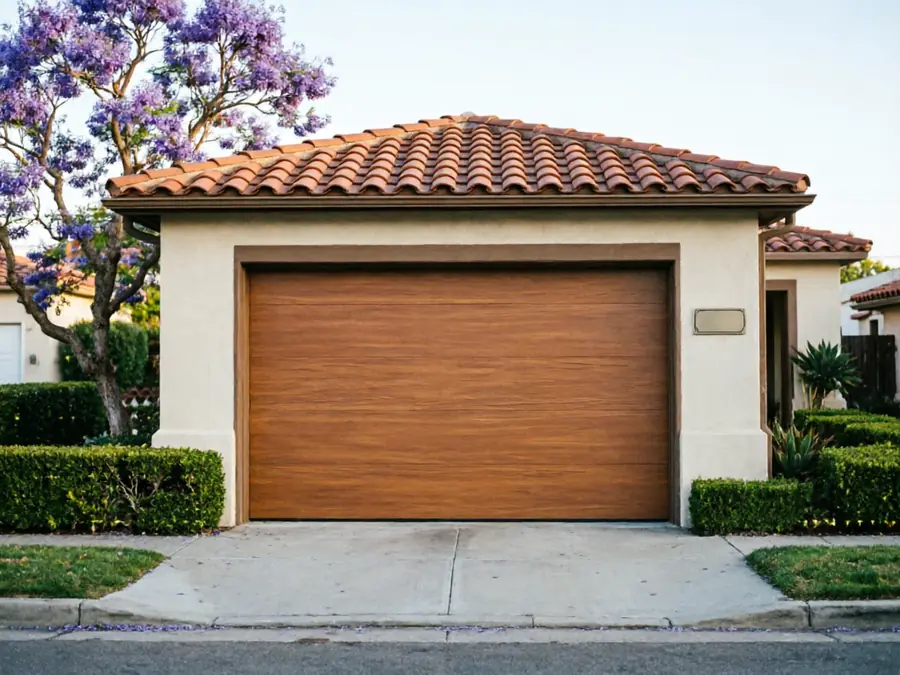
Housing in this area was mostly built between 1956 and 1999, with the median landing around 1983, and that's not spread evenly - it's concentrated across roughly seventeen distinct pockets that were built out in waves during the 1980s and 90s. That matters for repair work because it means a huge share of the original garage door hardware in Simi Valley is hitting the same age window at close to the same time. A spring that went in with a house built in 1983 is now past forty years old, regardless of how it looks from the driveway.
The mild, temperate climate here actually works in homeowners' favor in one way: doors aren't fighting the freeze-thaw cracking or heavy snow load that wrecks panels and tracks in colder regions. When something fails here, it's almost never weather damage - it's straight wear. Steel doesn't fatigue from cold snaps; torsion springs fatigue from cycle count, winding and unwinding every time the door opens, year after year, in a climate that never forces a long off-season.
So the pattern we see is consistent: original 1980s-era springs and openers, still in daily use, reaching the end of their rated life at roughly the same age across a lot of the same-era neighborhoods.
The Symptom
The most common version of this call is a door that won't budge and a loud bang that happened right before it stopped - that's a torsion spring letting go, and it's almost always tied to age rather than a single bad day. A door that lifts fine by hand but the opener struggles is usually a spring that's weakening, not dead yet, which is worth catching before it snaps.
A door that's noticeably heavier on one side, or that looks slightly crooked in the frame when it's halfway up, points to a cable or one spring failing while its pair hasn't yet - common on double doors with two torsion springs where one finally gives out after decades of carrying the load.
If the opener runs but the door doesn't move at all, check the sensor lights first; a bumped or dusty sensor eye near the floor causes more "broken opener" calls than anything mechanical. None of these point to a single cause until someone's looked at the hardware, which is the whole reason this is a diagnosis-first job, not a parts-swap job.
Service areas
Where we work around Simi Valley
Simi Valley and 7 nearby communities, each with its own page.
FAQ
Questions about this
How do I know if it's the spring or the opener that's broken?
If the door won't budge even when you try to lift it by hand, it's almost always the spring. If the door lifts easily by hand but the opener motor runs without moving it, the issue is usually the opener's drive gear or a sensor, not the spring. We check both before quoting anything.
Why did my spring break with no warning?
Torsion springs fail from accumulated cycle count, not from a single event. A lot of the garage doors in this area date back to the 1980s and 90s, so springs that have been winding and unwinding daily for decades are reaching the end of their rated life around the same time, regardless of how the door looks.
Can you repair an old steel panel instead of replacing the door?
Sometimes. A dented panel can often be straightened or swapped if a matching one exists. A cracked or rusted-through panel on an older door usually can't be matched, since manufacturers don't keep making the same profile for decades. At that point we'll tell you honestly if replacement makes more sense than repair.
Does Simi Valley's weather affect garage door wear?
Less than you'd think. The mild, temperate climate here doesn't put doors through the freeze-thaw cycling that cracks panels and seizes hardware elsewhere. Most failures we see are straight mechanical wear from age and daily use, not weather damage.
Tell us what your door is doing.
We serve Simi Valley, CA and nearby communities. Every job starts with a diagnosis, so you know what failed before any work begins.