
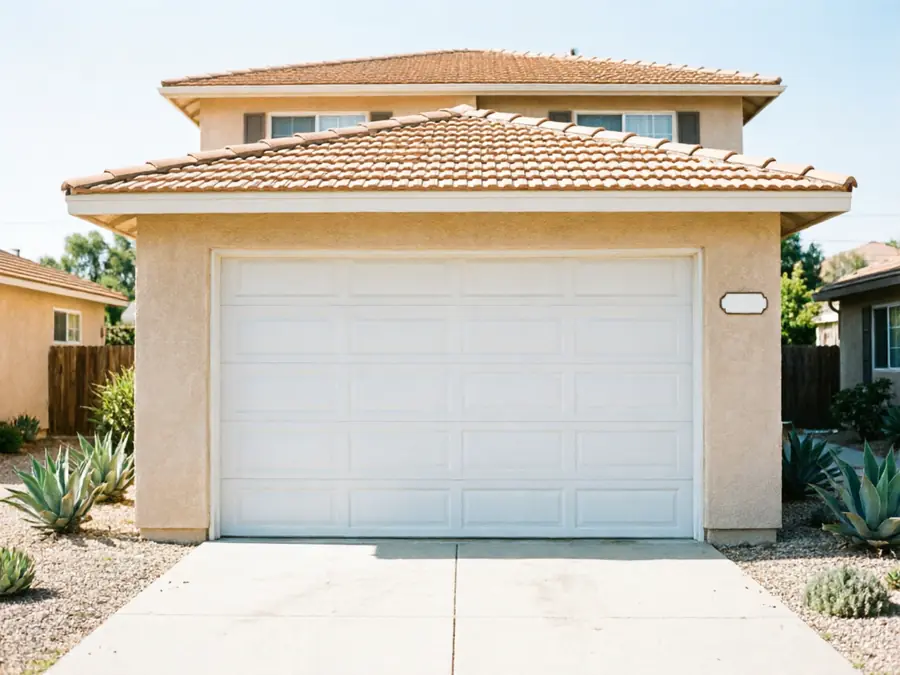
Garage doors
Garage doors we install
Steel, insulated, carriage, full-view and commercial doors, sized and fitted to your opening in Simi Valley.
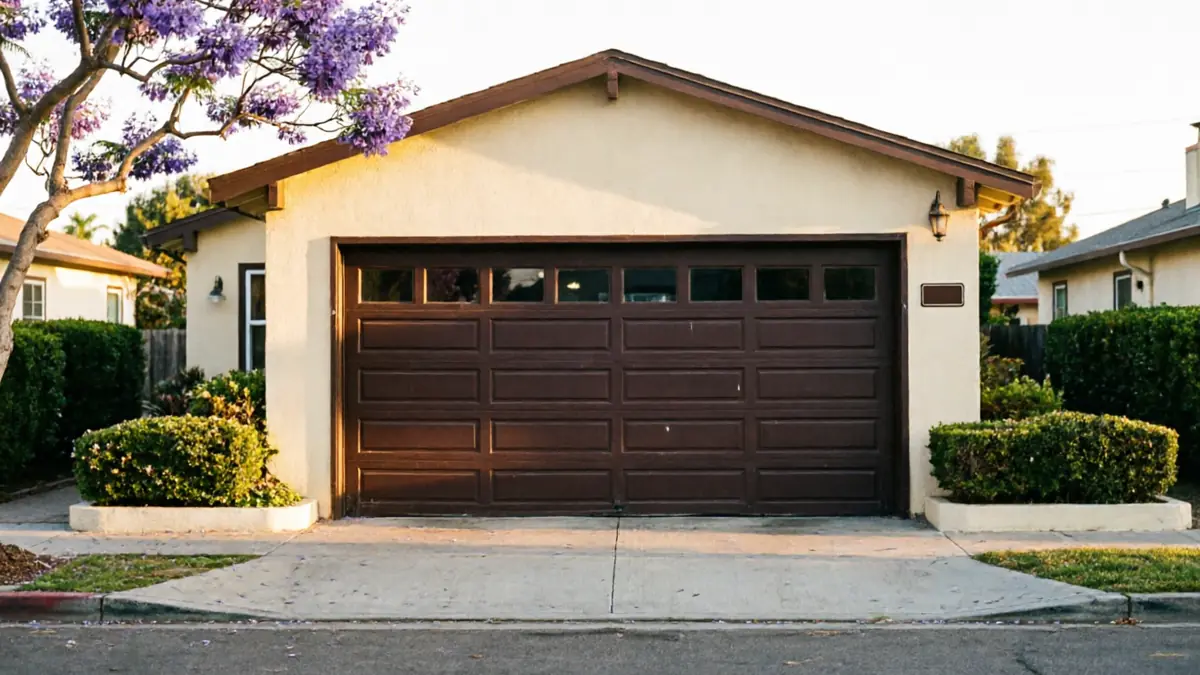
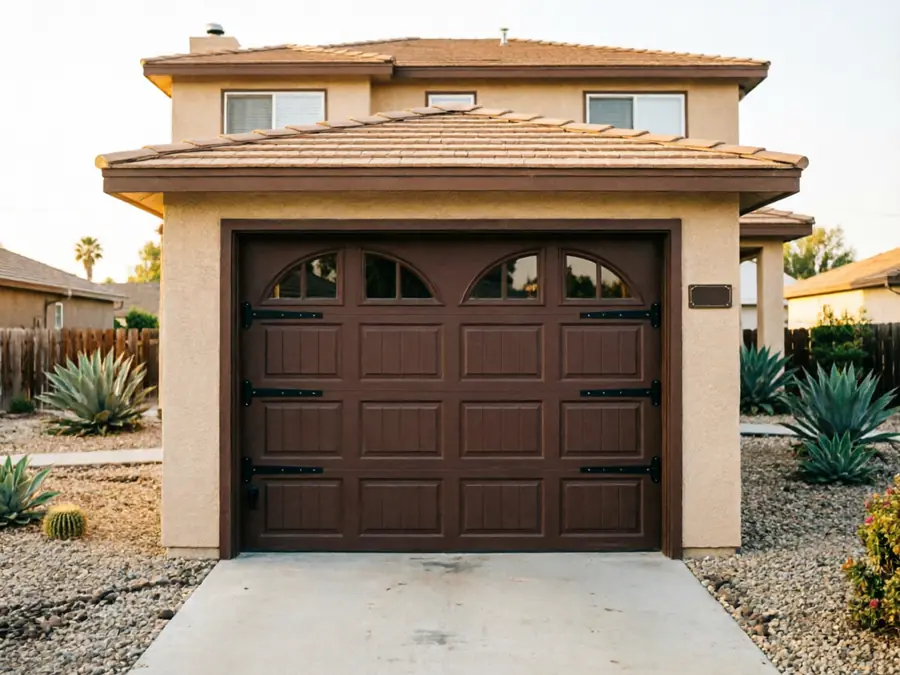
Carriage house
Request a quote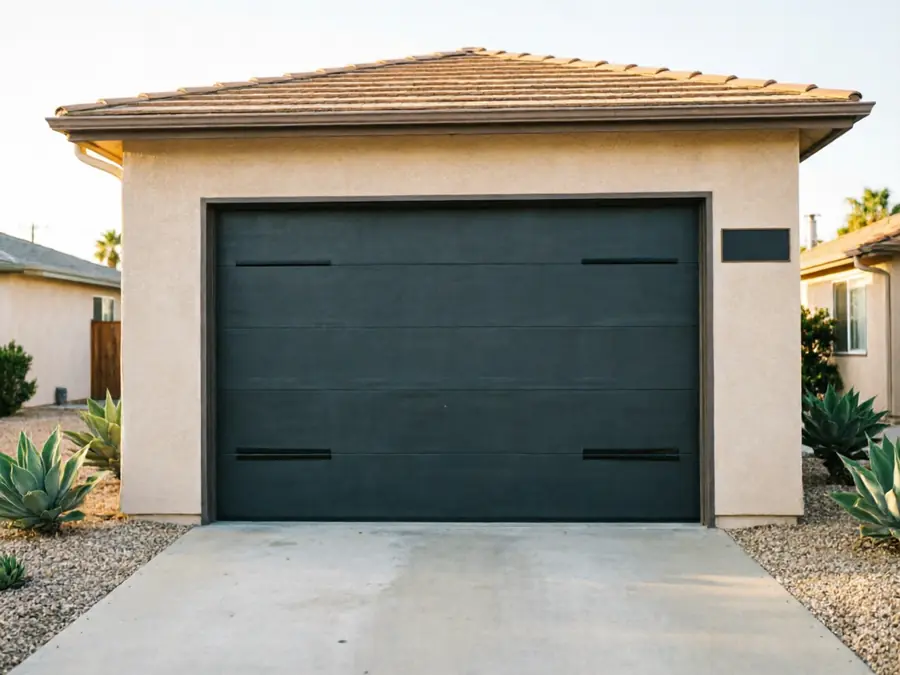
Modern flush
Request a quote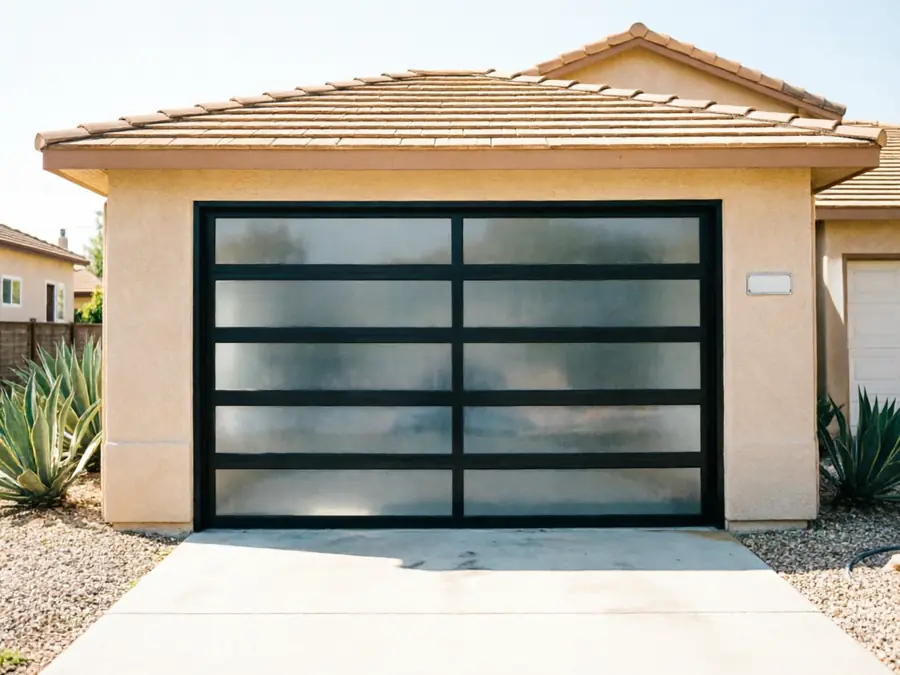
Full-view glass
Request a quote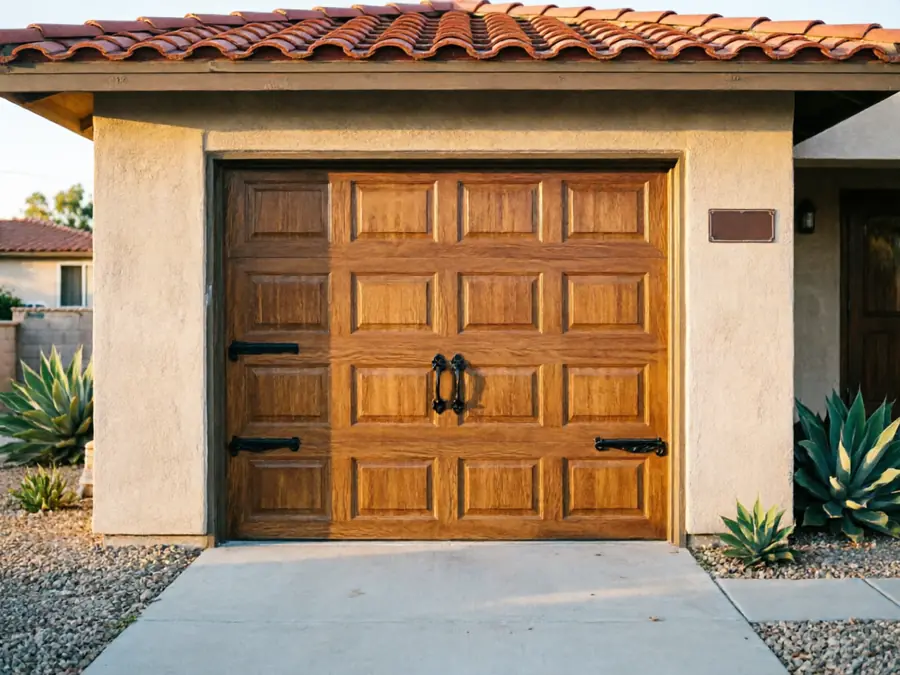
Raised panel
Request a quote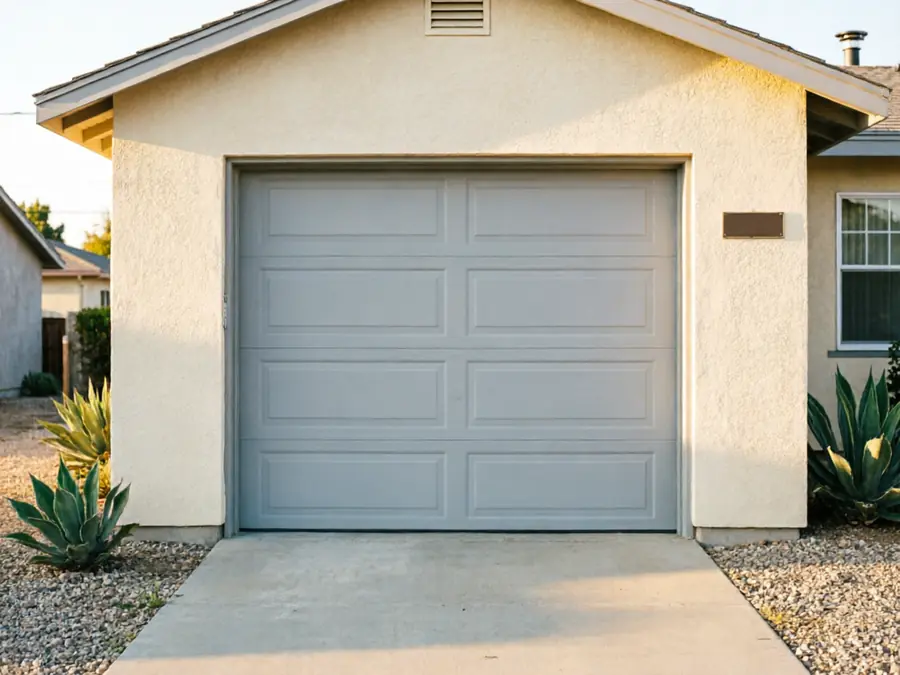
Commercial roll-up
Request a quoteMaterials & styles
Comparing door styles
General characteristics of each style. Exact options depend on the manufacturer and product line.
Sectional steel
Steel, insulated or non-insulated
The most common residential garage door style in North America. Horizontal panel sections hinge together and roll up along a pair of vertical-then-horizontal tracks. Available as a single steel skin or, more often, an insulated build with a foam core between two steel layers.
Carriage house
Steel, composite, or wood-faced
Styled to look like the swing-out carriage or barn doors of an older building, but operates on the same overhead track as a standard sectional door. Usually finished with decorative hinge and handle hardware to complete the look.
Modern flush
Steel or aluminum
A flat, smooth-faced panel design with no raised molding or ridges - a minimalist look that pairs with contemporary architecture. Built on the same sectional-track mechanism as a traditional panel door.
Full-view glass
Aluminum frame with glass or acrylic panels
Aluminum-framed sections glazed with glass (clear, frosted, or tinted) instead of solid panels. Common on modern homes and commercial storefronts for natural light; typically offers less insulation than a solid steel door unless the glazing itself is insulated.
Raised panel
Steel
The traditional embossed-panel look most associated with a residential garage door, available in long- or short-panel patterns. Comes insulated or non-insulated, same as sectional doors.
Commercial roll-up
Heavy-gauge rolling steel
A rolling steel curtain (often slatted) built for higher daily cycle counts and larger openings than a residential sectional door - loading docks, warehouses, and commercial bays.
Options
Insulation & options
Insulated doors sandwich a foam core (polystyrene or polyurethane) between two steel skins; non-insulated doors are a single steel layer. Insulation is usually described by R-value, and thicker cores generally mean a higher R-value and a heavier door - which changes the spring and opener sizing needed to lift it safely.
Beyond the core, the main choices on most manufacturer lines are the color finish, the window/lite pattern (if any), and decorative hardware. Exact availability varies by manufacturer and product line.
FAQ
Common questions
Why do so many Simi Valley garage doors need torsion springs instead of extension springs?
Most houses in this area were built between 1956 and 1999, and torsion spring setups mounted above the door were standard through that whole window. Extension springs along the tracks show up more in older or custom builds outside that range, which is less common here. So if your door is original, it's almost certainly torsion.
Do you work outside Simi Valley itself?
Yes - we get calls from the surrounding area including Santa Susana, Bell Canyon, Oak Park, Moorpark, and the other towns within roughly a 20-mile radius. Distance affects how quickly we can slot in a same-day call, but it doesn't rule anything out.
My opener is from the 90s and still half-works. Should I replace it?
Depends what's failing. If it's the sensors or the board, that's often a straightforward fix. If the motor is going and the unit is original to a 1980s or 90s build, we'll usually tell you replacement makes more sense than repair, since parts for that generation are getting harder to source.
Does Simi Valley's climate cause garage door problems?
Not in the way cold or coastal climates do. The area sits in a mild temperate band, so we don't see much rust, seal failure from freeze-thaw, or wind-load damage. Most of what we fix here is age and wear on original hardware, not weather damage.
Tell us what your door is doing.
We serve Simi Valley, CA and nearby communities. Every job starts with a diagnosis, so you know what failed before any work begins.