
Garage Door Service · Fillmore
Garage Door Repair for Fillmore's 1970s Housing Stock
Garage door repair for Fillmore homes built around 1975, serviced by a Simi Valley crew that travels 13 miles and prices the job to local income, not citywide averages.
Can You Do This Yourself
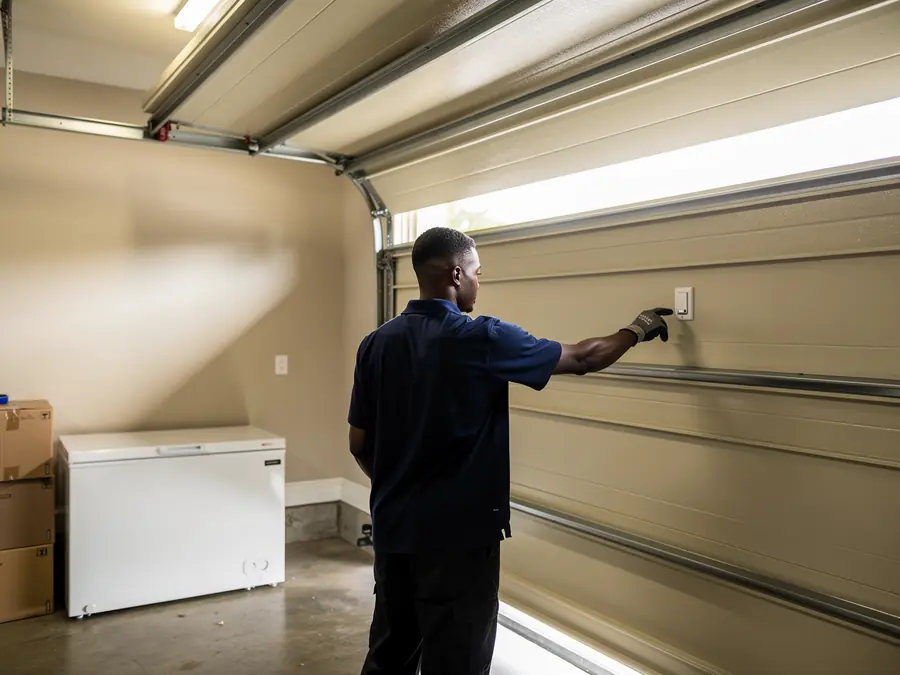
Fillmore's median household income is $90,343, well under the $146,404 median across the rest of this company's service area. That gap matters here more than most places, because a botched DIY spring job doesn't just cost a trip to the hardware store - it can mean a replacement door you weren't budgeting for. Most houses in Fillmore date to around 1975, older than the 1956-1999 range and 1983 median that covers the broader 17-area service footprint. Original hardware from that era is often undersized by today's standards and wears unevenly.
Some jobs are genuinely fine to handle yourself: tightening loose hinge bolts, lubricating rollers, clearing track debris, replacing weatherstripping. Torsion spring swaps are not on that list, regardless of your toolbox. The spring is under enough tension to break a bone or worse, and on a door this old the drum and cable sizing may not match what's sold off the shelf today. If you're not sure which category your job falls into, that uncertainty itself is the answer - call it in.
The Cost of This Job
At a median income of $90,343, a full door-and-opener replacement takes a bigger bite out of a Fillmore household's budget than the same job would in neighborhoods averaging $146,404 across the wider service area. That's the practical reason repair beats replacement more often here than it might elsewhere - not because the doors are built better, but because the math works differently when the median income is lower.
The good news for repair costs: doors from the 1975 era generally use standard torsion spring sizes and steel track that's still stocked, so a broken spring or bent roller track is usually a straightforward fix rather than a special-order job. Where it gets expensive is when the track itself is warped beyond bending back into shape, or when the opener's drive gear has failed on a unit old enough that the manufacturer no longer makes parts for it. In those cases, repair cost starts approaching replacement cost, and that's worth saying plainly rather than padding a repair bill to avoid it.
Parts We Carry
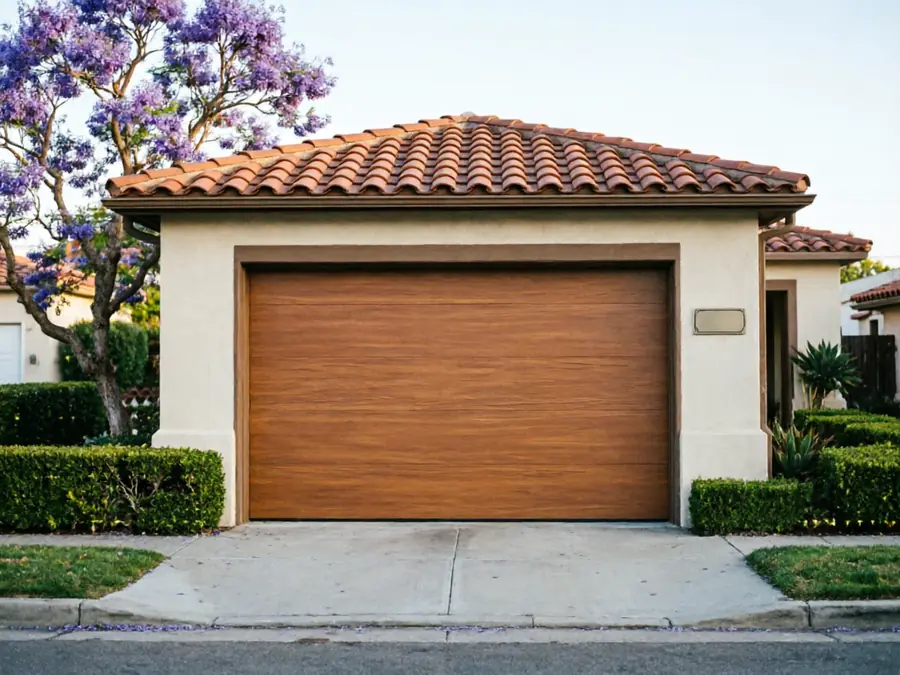
For a town where most doors trace back to roughly 1975, the truck carries parts sized for that generation of hardware: standard torsion springs, extension spring conversion kits for older two-spring setups, steel roller brackets, and center bearing plates that match the heavier gauge track common to that build era. Fillmore sits in the same mild temperate climate band as the rest of the service area, so rust and weather cracking aren't the main failure drivers here - fatigue from decades of cycles is.
One honest limit: if a door's drum, shaft, or opener assembly is specific to a model that's been discontinued for years, we may not have that exact part on the truck and it could mean a short order wait rather than a same-visit fix. We'll tell you that up front rather than improvising with a part that doesn't quite fit. For most spring, cable, roller, and bracket failures on a house this age, the common parts cover it without a special order.
What the Repair Takes
The crew comes from Simi Valley, 13 miles out, so the job starts with an inspection once the truck arrives - checking spring wind, cable fray, track alignment, and whether the opener's force and limit settings have drifted, which is common on units installed decades ago and never recalibrated. Across Fillmore's roughly 5,105 households, the pattern repeats often enough that most repair calls land in the same handful of categories: snapped torsion spring, frayed cable, worn rollers, or a opener that's aged out of reliable operation.
A straightforward spring or cable swap doesn't take long once the right part is confirmed on the truck. What takes longer is anything involving a bent track or a door panel that's cracked or rusted through - those jobs need measuring before the right replacement panel or section can even be ordered. We won't quote a fix on the phone sight unseen; the inspection comes first, then the plan.
FAQ
Questions about this
Why does the income in Fillmore affect whether I should repair or replace my door?
A lower median income relative to the rest of the service area means a full replacement is a bigger share of a household's budget. Since most Fillmore doors are from the mid-1970s and use common spring and track sizes, repair is usually both cheaper and sufficient, unless the track or opener parts are no longer made.
How far does the crew travel to reach Fillmore?
The shop is based in Simi Valley, about 13 miles away. There's no local branch in Fillmore, so the truck comes from Simi Valley for every job, which is worth factoring in if you're hoping for a same-hour callback.
Will my 1970s-era door hardware still be available?
Most of it, yes. Standard torsion springs, roller brackets, and track from that era are still common stock. The exception is opener-specific parts on a model old enough to be discontinued, which can mean a short wait for an order rather than a same-visit fix.
Tell us what your door is doing.
We serve Simi Valley, CA and nearby communities. Every job starts with a diagnosis, so you know what failed before any work begins.