Can You Do This Yourself
Topanga's median home was built around 1971
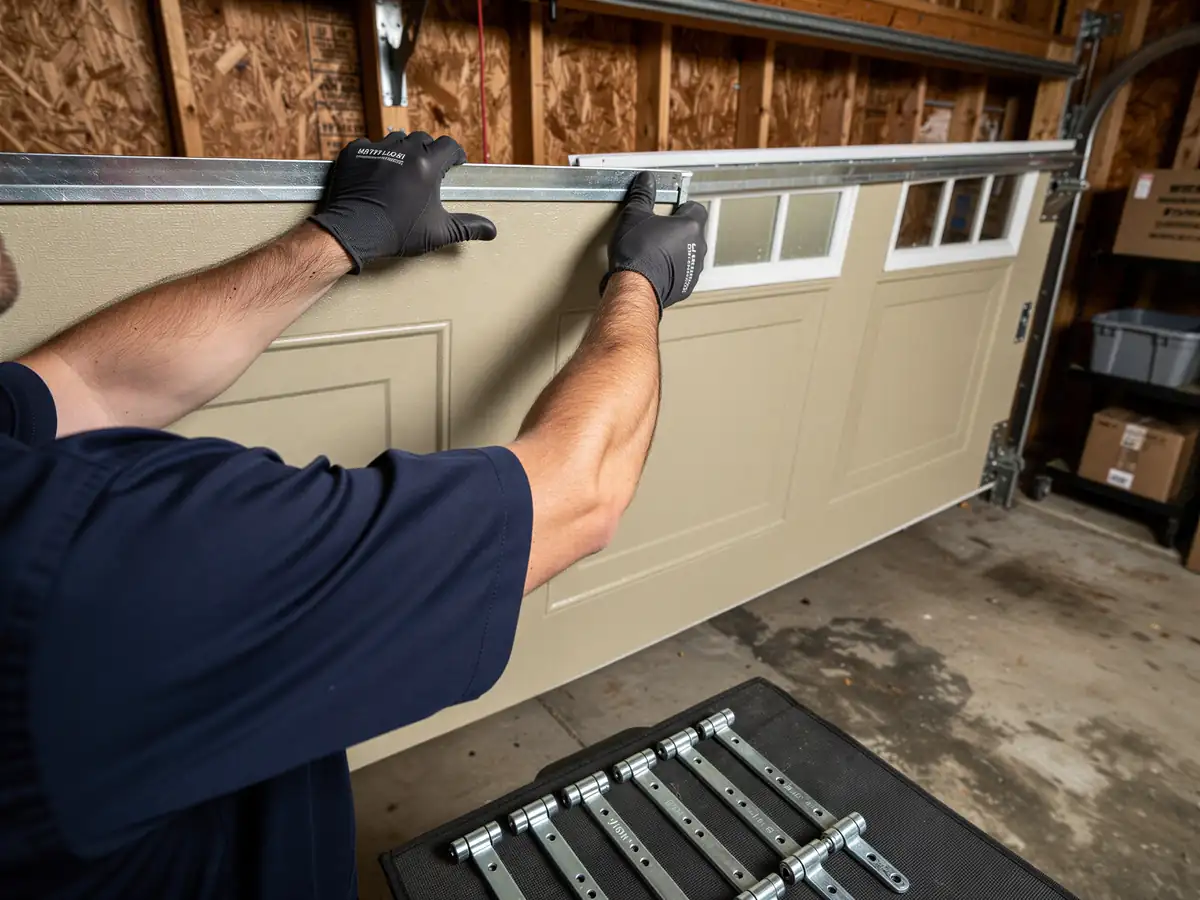
About a dozen years ahead of the 1956-1999 range we see across the rest of the service area, where the typical house dates closer to 1983. That earlier build year matters here: a torsion spring from a 1971 door has gone through several replacement cycles by now, but the shaft, drums, and center bearing plate behind it are often the same steel the house was framed with. Nobody stocks brackets drilled to that spec anymore, so a DIY spring swap on an older setup can turn into a hardware hunt mid-job.
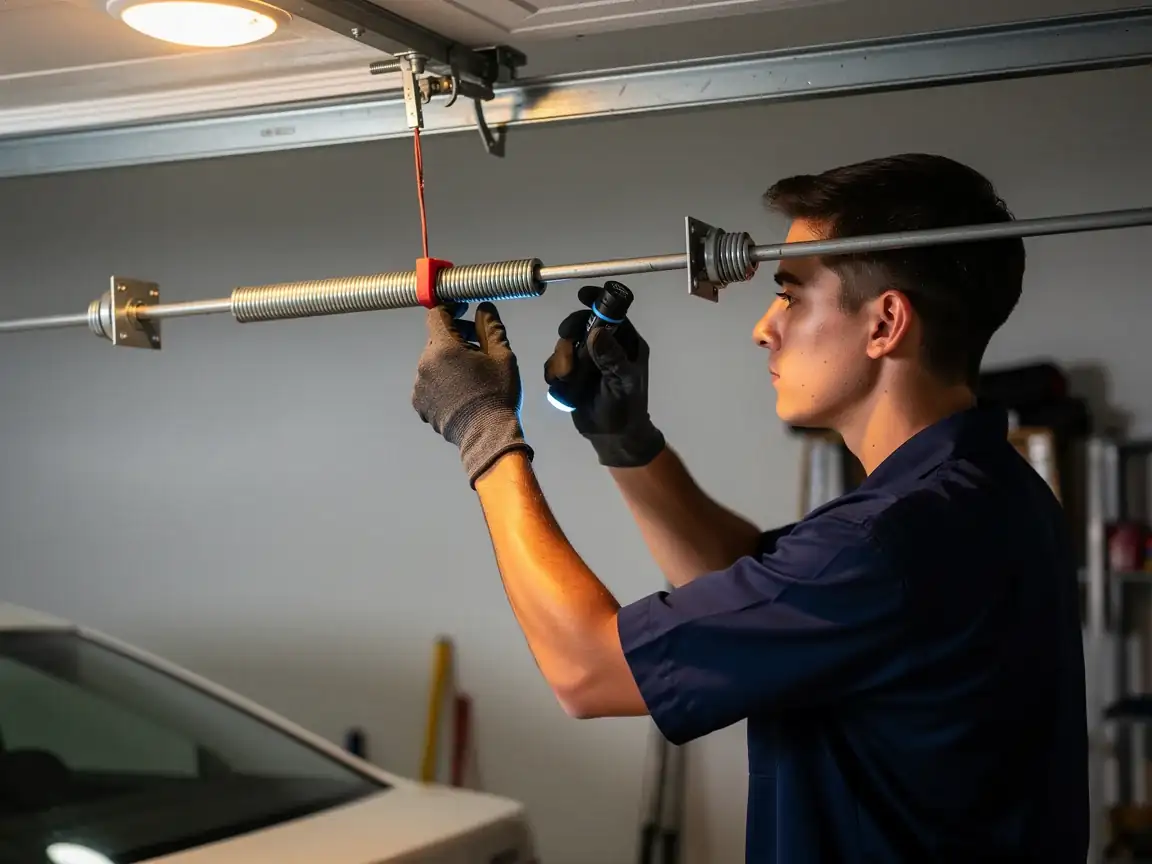
A torsion spring is wound under enough tension to snap a wrist or worse if the winding bars slip
That's true everywhere, but it's a bigger risk on older shafts where the set screws have corroded into the metal and won't back out clean. If you've done this work before and have the right bars and cones, a newer door built after 2000 is a reasonable DIY candidate. A door on original 1970s hardware is not the place to learn. We'll say plainly: this is one job where paying for the visit usually costs less than a trip to urgent care.
The Cost of This Job
We don't post a flat price for spring repair because the number depends on what's actually on the door: whether it's a single spring or a matched pair, whether the drums and cables need replacing alongside the spring, and whether the opener's travel limits need resetting after. Topanga's housing sits at a median income of $142,553, a touch under the $146,404 median across the full service area, which tells us something about typical household budgets here but nothing about what any single repair will run - every quote still comes from what we find on the door, not from the zip code.
What we can tell you is which factors move the number. A single broken spring on a door that otherwise checks out is the cheapest version of this job. A pair of springs, worn cables, and a drum that's cracked from running unbalanced for weeks is the expensive version. We quote on site after we look at the shaft and the drums, not over the phone from a description.
What the Repair Takes
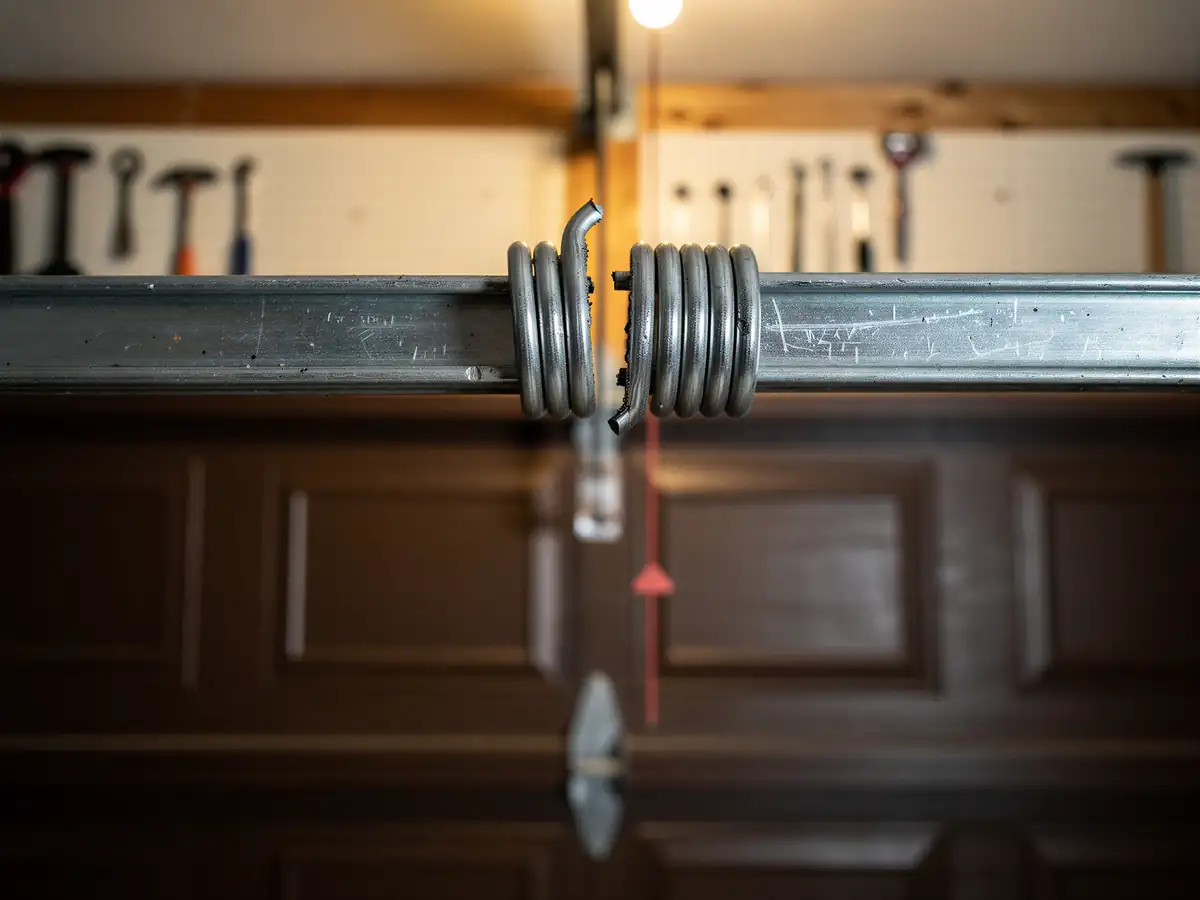
The mild temperate climate across this part of the service area means spring failure here is almost always a cycle-count problem rather than metal fatigue from extreme heat or cold swings - the spring simply reaches the end of its rated open-close cycles and lets go, usually with a bang loud enough to bring the household running. We check the opposite spring too, since a matched pair that's been under the same load for the same years tends to fail close together even if only one has actually broken.
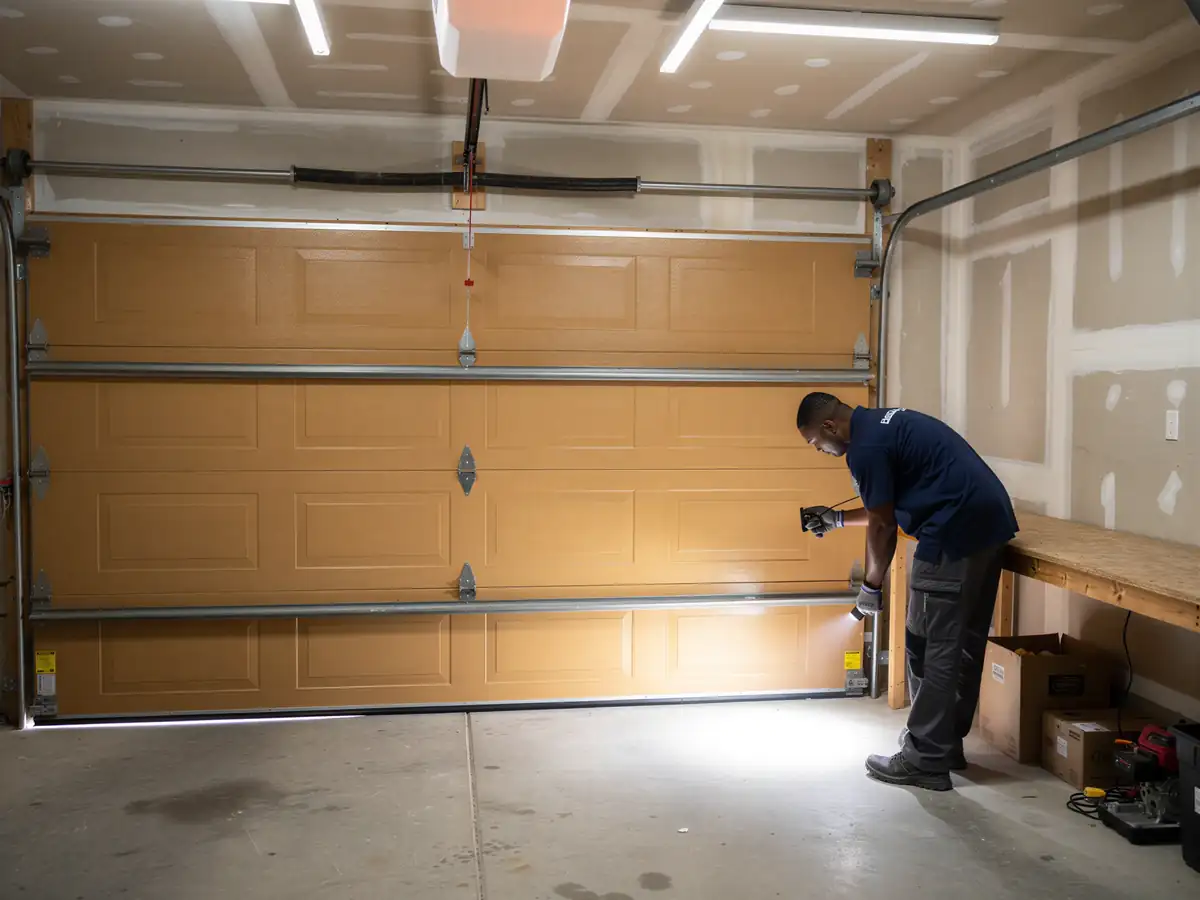
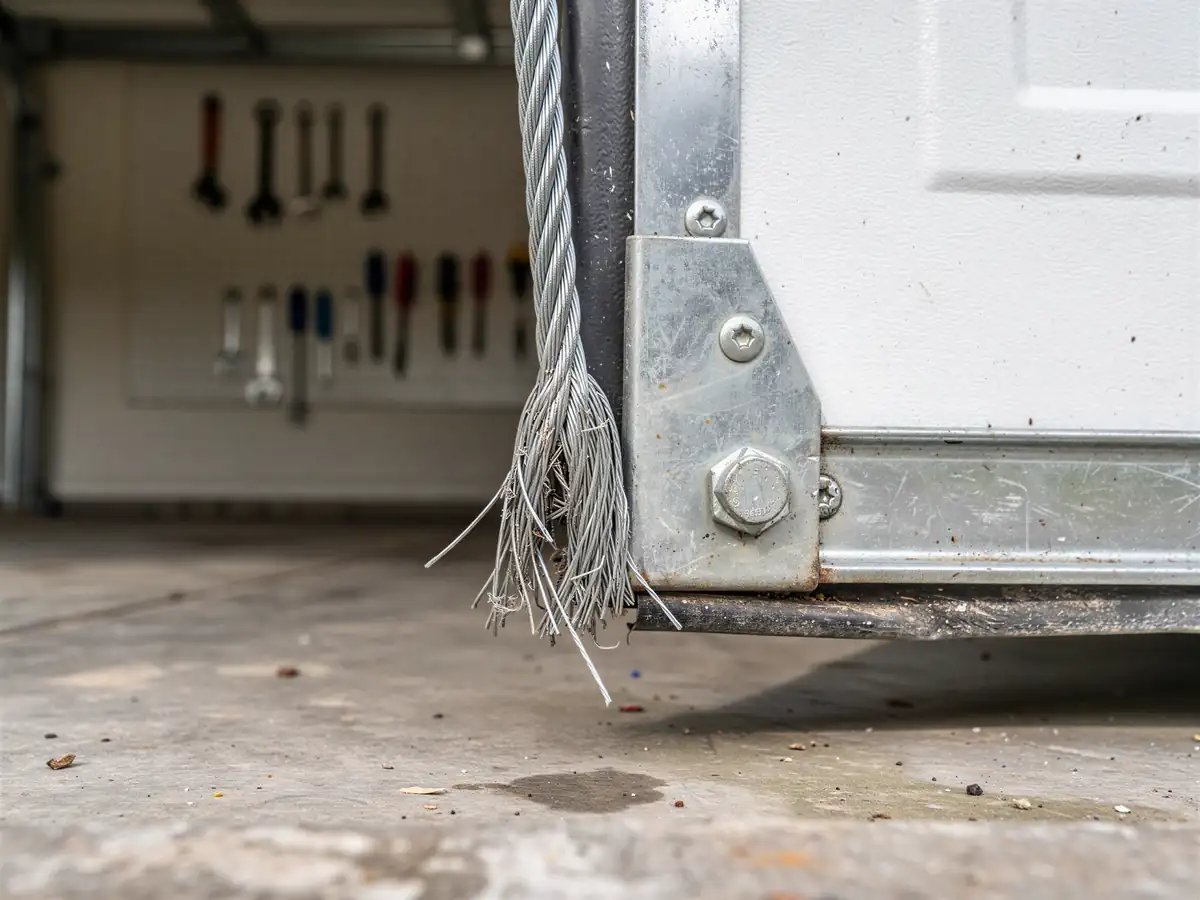
On a 1971-era door, we're also checking for a safety cable through the spring, which wasn't standard equipment when these houses went up. If it's missing, we add one - a broken spring without a restraint cable can whip the coil loose and put it through drywall or a windshield. We check the drums for hairline cracks, the bearing plate for wear grooves, and the cable ends for fraying before we call the job done. If the opener's been fighting an unbalanced door for a while, we'll test the gears too, since that's the part that usually gives out next.
Booking a Visit
Topanga sits about 14 miles out from our Simi Valley base, among the farther stops we run on a given day
So we schedule the trip rather than treat it as a drop-in. With roughly 3,098 households in Topanga compared to the 69,002 across the wider service area, it's not a high-volume route for us, which is exactly why we ask for the make and rough age of your door when you call - it lets us bring the right spring size and cable length instead of guessing on the drive out.
- 14 miles
- 3,098 households
If you want the general rundown of what we cover in Topanga beyond spring work
That's on our Topanga garage doors page. For the fuller writeup on how we handle spring repair out of our home base, see the Simi Valley spring repair page.