How Long It Takes
Most of the houses we work on across the service area went up between 1956 and 1999
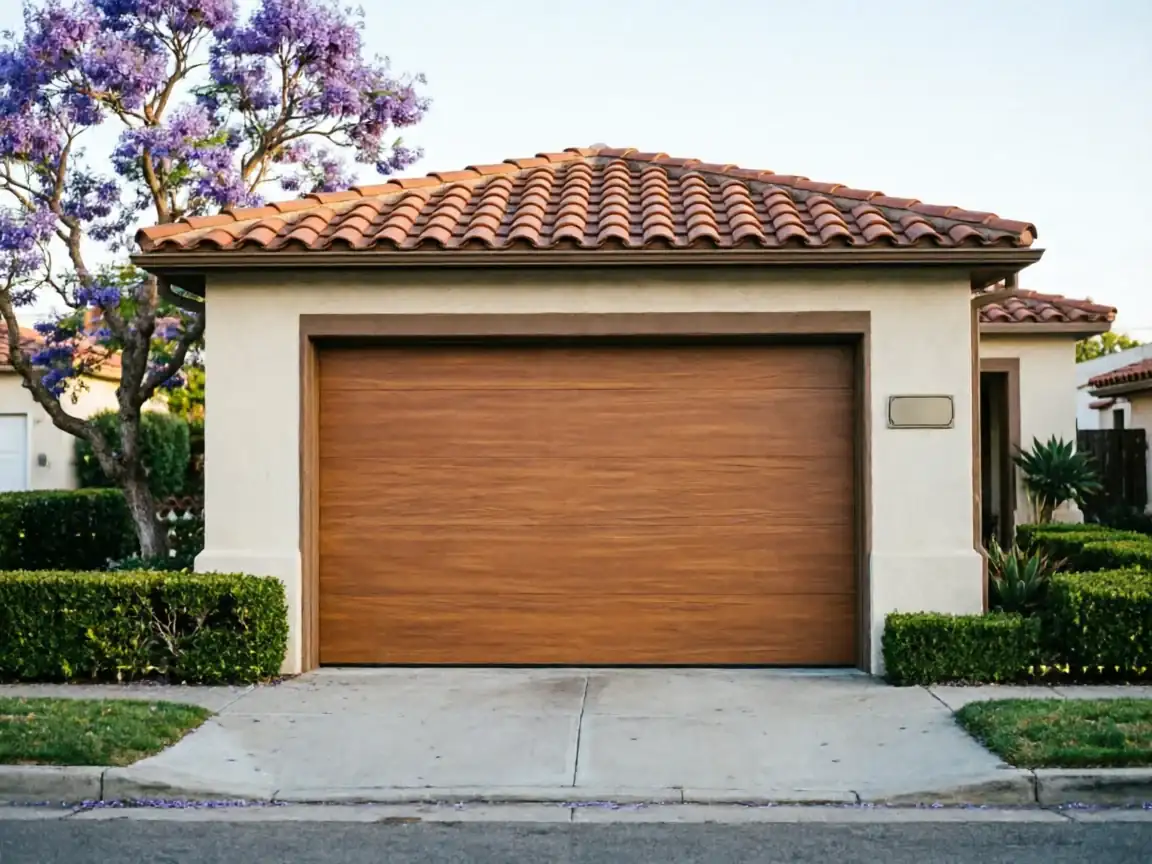
With a median around 1983. Castaic skews younger than that - the typical home here dates closer to 1990, which puts it on the later end of our area's housing stock rather than the middle. That gap matters for panel work. A 1983-era door usually means older aluminum or steel sections on hardware that's been swapped once or twice already. A 1990-built garage is more likely to still have its original steel panel set and the opener that came with the house, just worn from three decades of regular use.
Because Castaic sits about 16 miles out from Simi Valley
We build the drive into the visit before we quote a timeline. We don't keep a crew stationed in Castaic, so the job starts with that travel, not with someone already on your street. Once we're there, a single-panel swap on a standard double door is usually a same-visit job if the section is in stock on the truck. If your door uses an obsolete profile from the late '80s or a track width that doesn't match current stock, we may need to order the panel, and that adds days, not hours.
- 16 miles
Parts We Carry
We stock panel sections sized for the steel and aluminum doors common to homes built from the 1980s into the 1990s, since that's the bulk of what we see across the 17 named areas we cover. A door from a 1990-built Castaic home is more likely to take a standard short-panel or long-panel steel section than the heavier, narrower stock sometimes found on older 1960s construction elsewhere in the service area.
What we don't carry on the truck: discontinued wood-composite panels and any custom-width sections cut for a non-standard opening. If your door falls into either category, we'll measure on site and order the part, which means a second trip. We'd rather tell you that up front than promise a same-day fix we can't deliver.
Booking a Visit
When you call, tell us the door's approximate age if you know it and whether the damage is one panel or a run across the bottom section - that changes what we load before the 16-mile drive out. Mild temperate conditions here mean we're not usually chasing frost-cracked seals or heat-warped steel, so damage is almost always physical: a backed-into door, a dented panel, or a section that's rusted through near the bottom where water sits.
We'll ask for the door's brand and panel style if it's visible on the frame or a sticker. That's the fastest way to confirm we're bringing the right part instead of a close guess.
What the Repair Takes
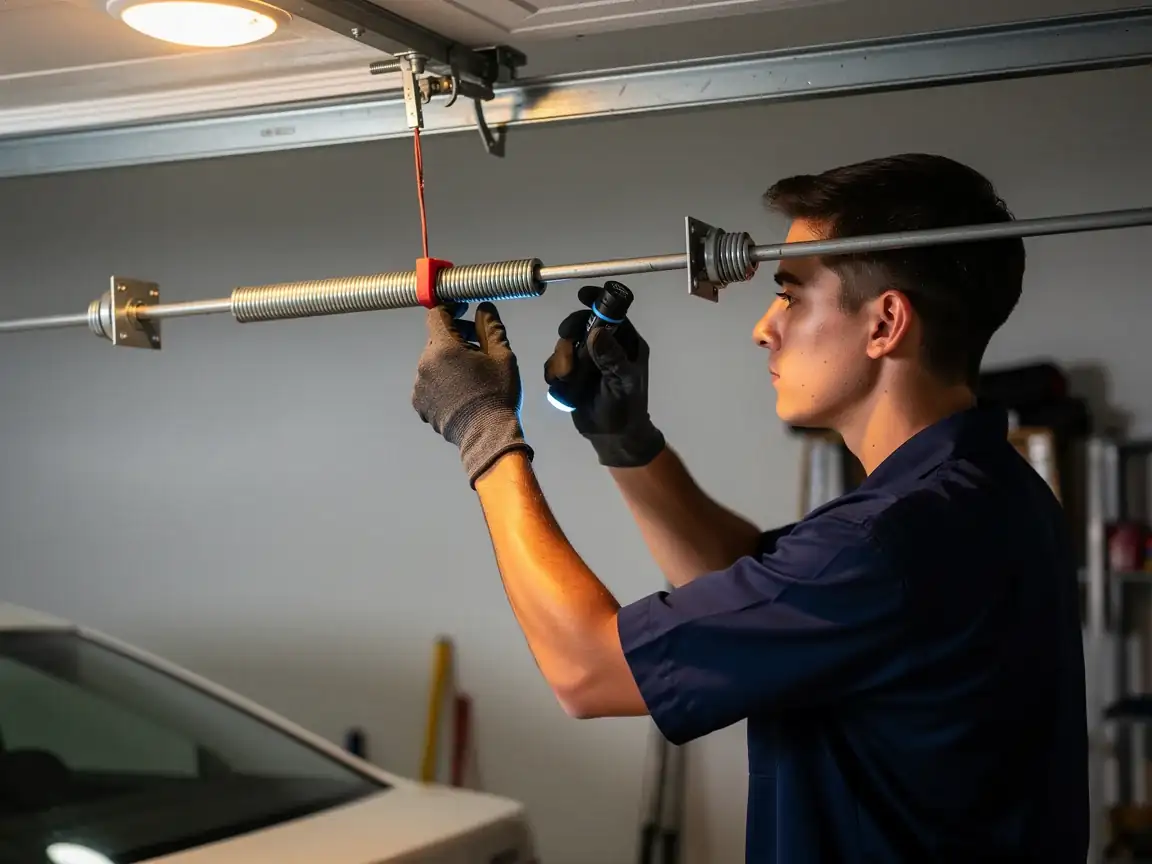
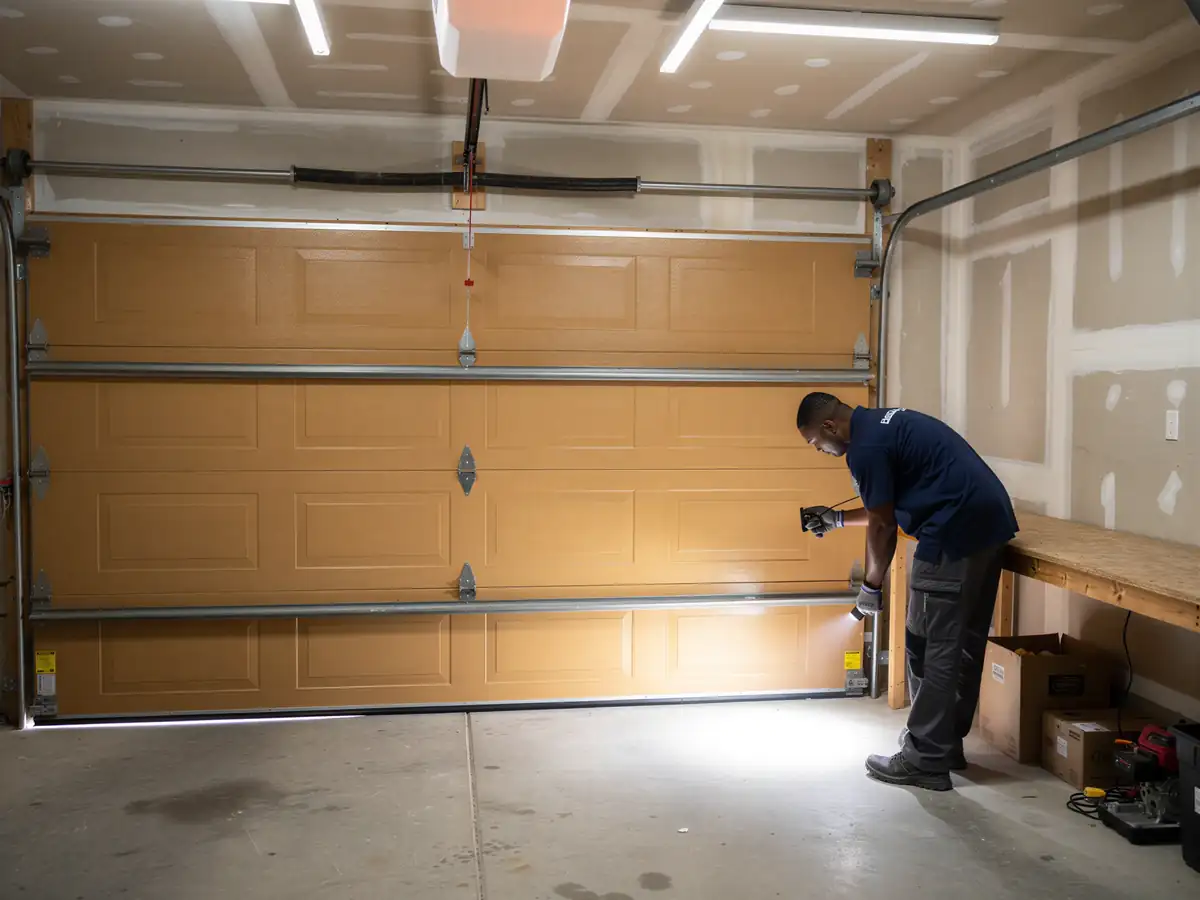
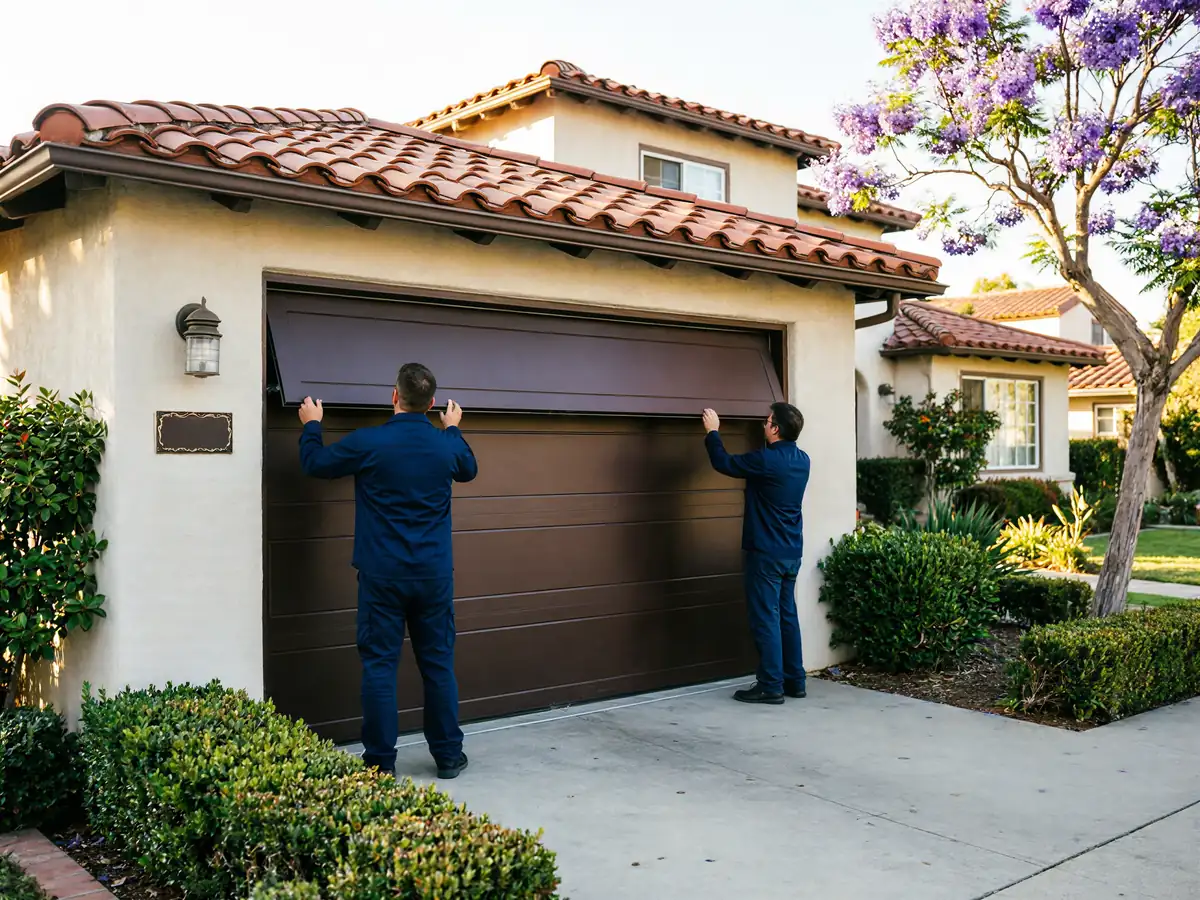
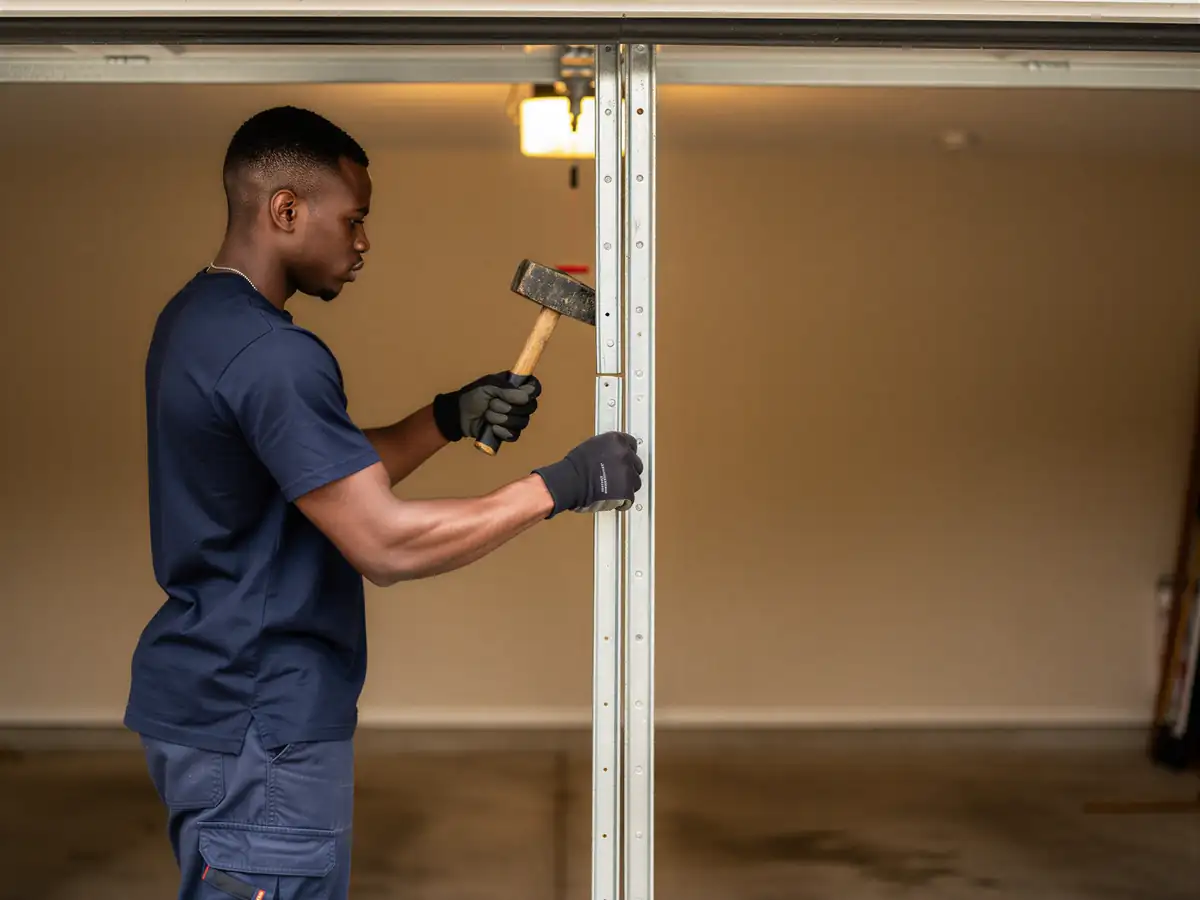
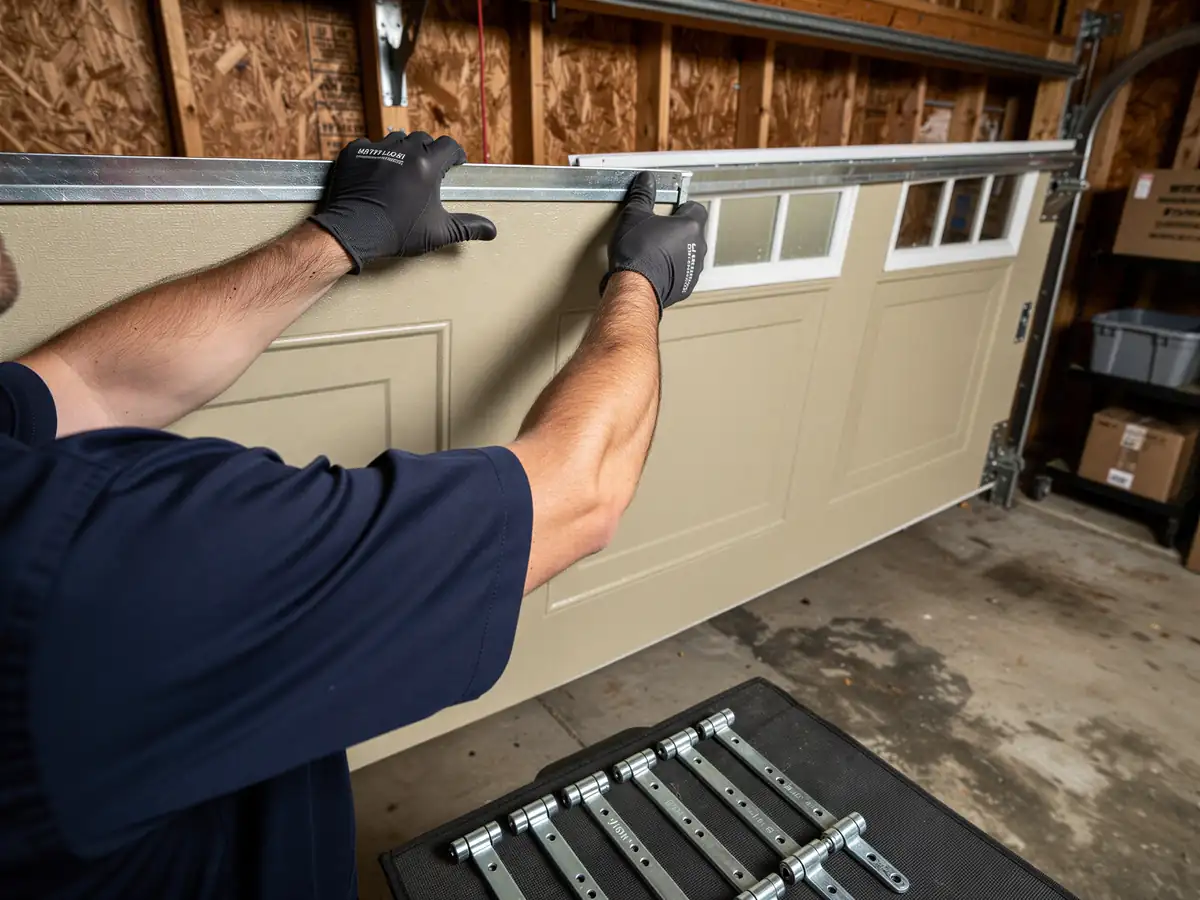
Panel replacement means unbolting the damaged section from the ones above and below it
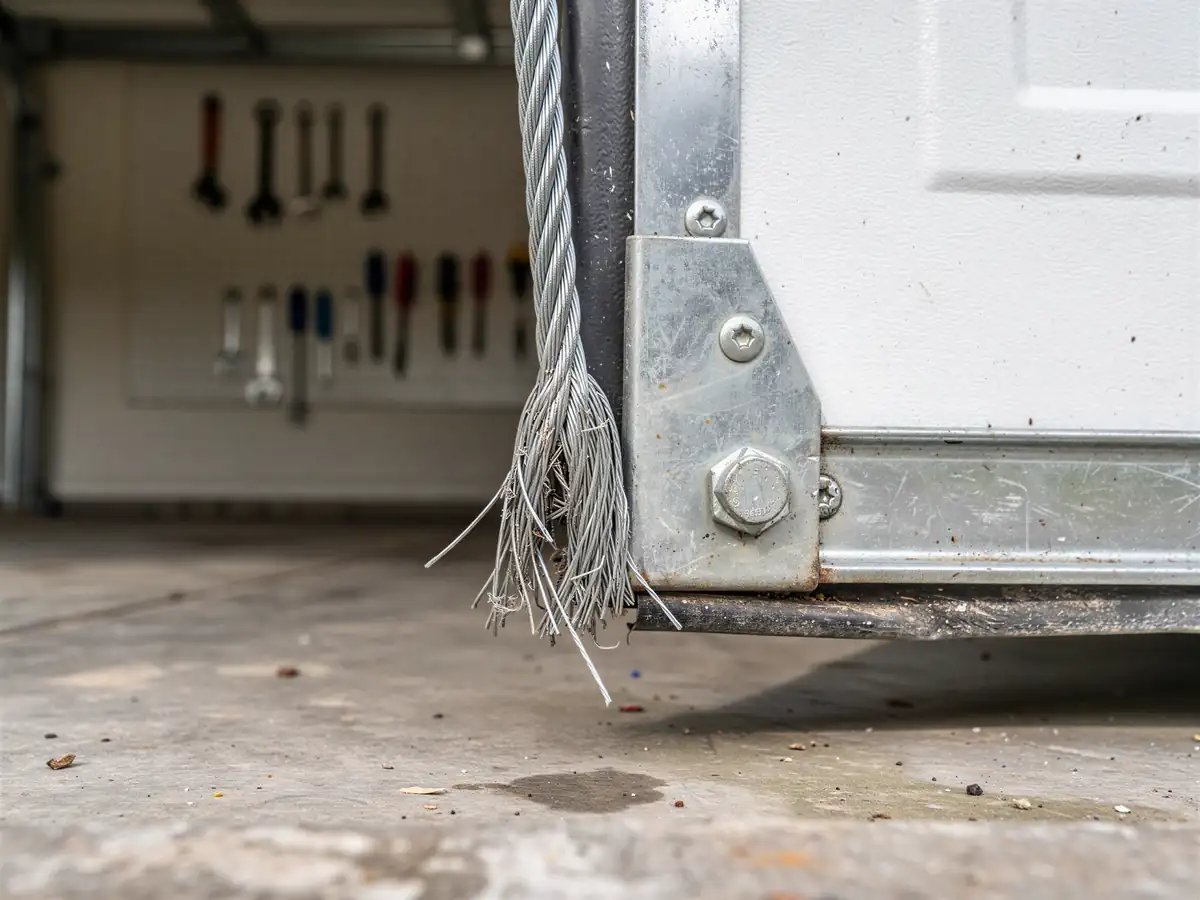
Disconnecting it from the track rollers and any cabling that runs through it, and fitting the new section without throwing off the balance of the whole door. On a door that's never had panel work done, this is usually straightforward. On a door that's had a prior repair or a mismatched section added at some point, we sometimes find hardware that doesn't line up with what a 1990-era build should have, and that adds time to the job.
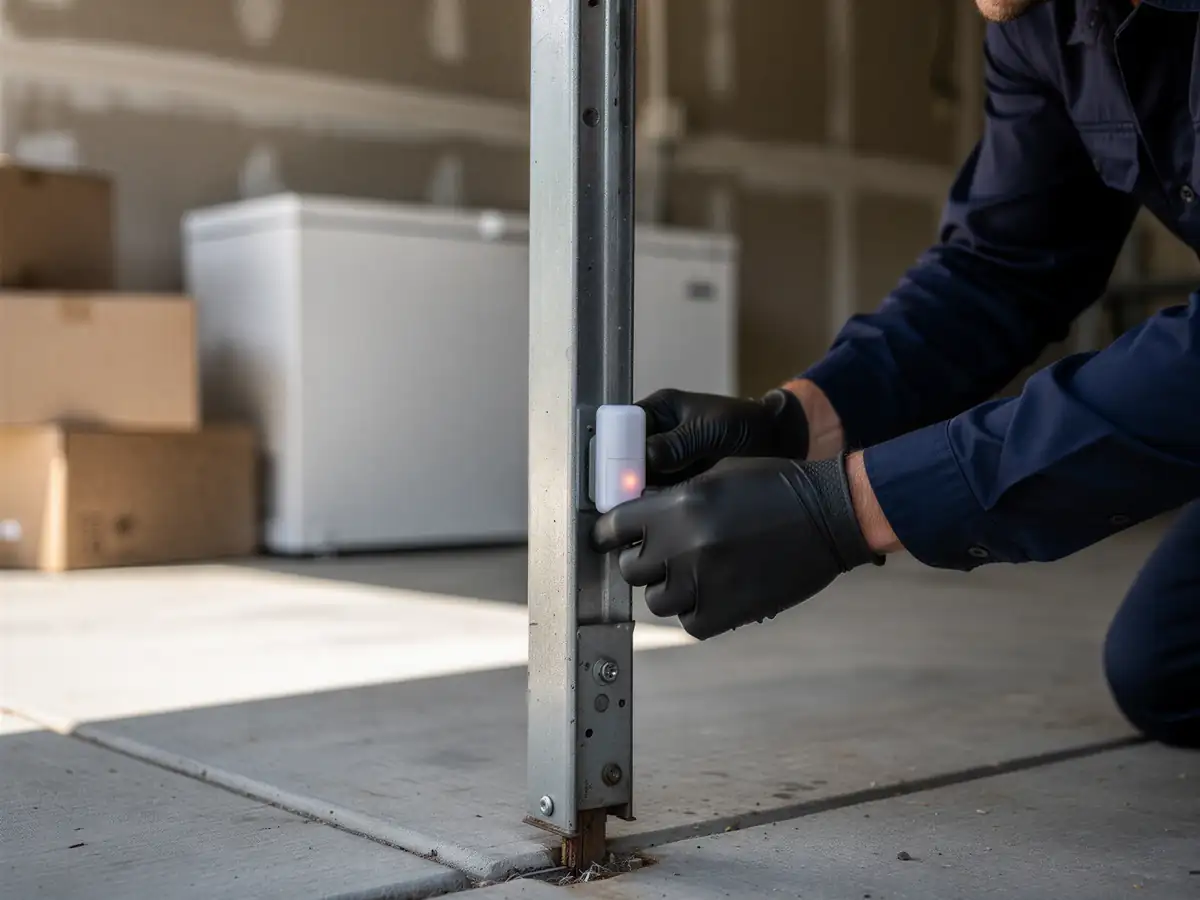
We test the opener's travel limits and force settings after any panel swap
Since a new section can sit slightly differently than the one it replaced. Skipping that step is how doors end up straining the opener motor within a year.
The Cost of This Job
We don't have a posted price for panel replacement specific to Castaic, and we're not going to invent one. Cost depends on panel size, whether the section is in stock, and how much additional hardware needs adjusting once it's in. What we can tell you is that income levels here run a bit under the service area's overall median of $146,404 - Castaic's figure is closer to $132,153 - which doesn't change what the part costs, but it's worth knowing we don't pad quotes to match a neighborhood. Call for a number specific to your door.